
Abstract
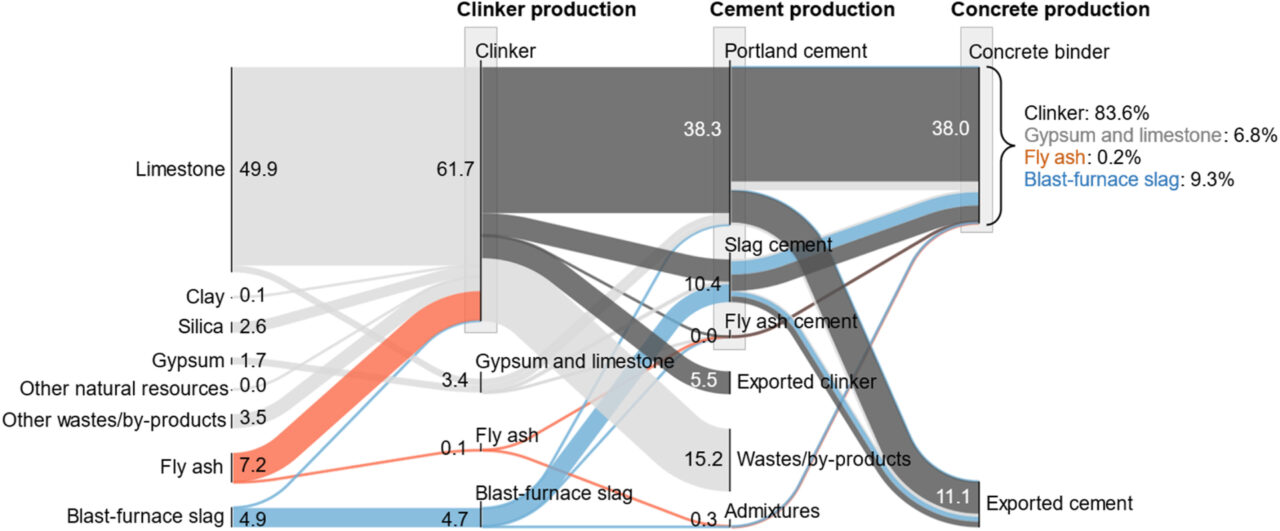
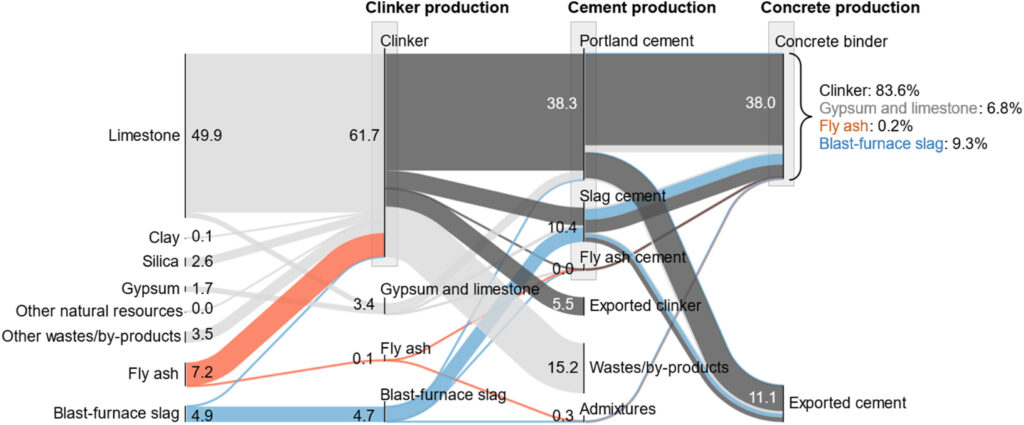
The cement and concrete industry is increasingly turning to blast furnace slag and fly ash to decarbonize its products, mainly as clinker substitutes or as mineral admixtures capable of binding CO2. However, the efficacy of this strategy in reducing system-wide emissions across concrete, steel, and electricity production remains unclear. Using Japan as a case study, this study shows that although slag and fly ash can reduce CO2 emissions within the concrete sector, sustaining blast furnaces and coal-fired power plants to secure these by-products ultimately increases system-wide emissions across three sectors. Retaining them would be defensible only when both blast furnaces and coal-fired power plants achieve deep decarbonization, on the order of ∼90% emission reduction. Otherwise, dependence on these by-products risks locking in emission-intensive infrastructure and undermining system-wide decarbonization. These findings indicate that while slag and fly ash should be fully utilized, their role must be transitional; securing their supply alone does not justify retaining blast furnaces or coal-fired power plants.
Authors
Takuma Watari, Zhi Cao, and Benjamin McLellan
Journal
Journal of Cleaner Production, 554, 148121, Link